
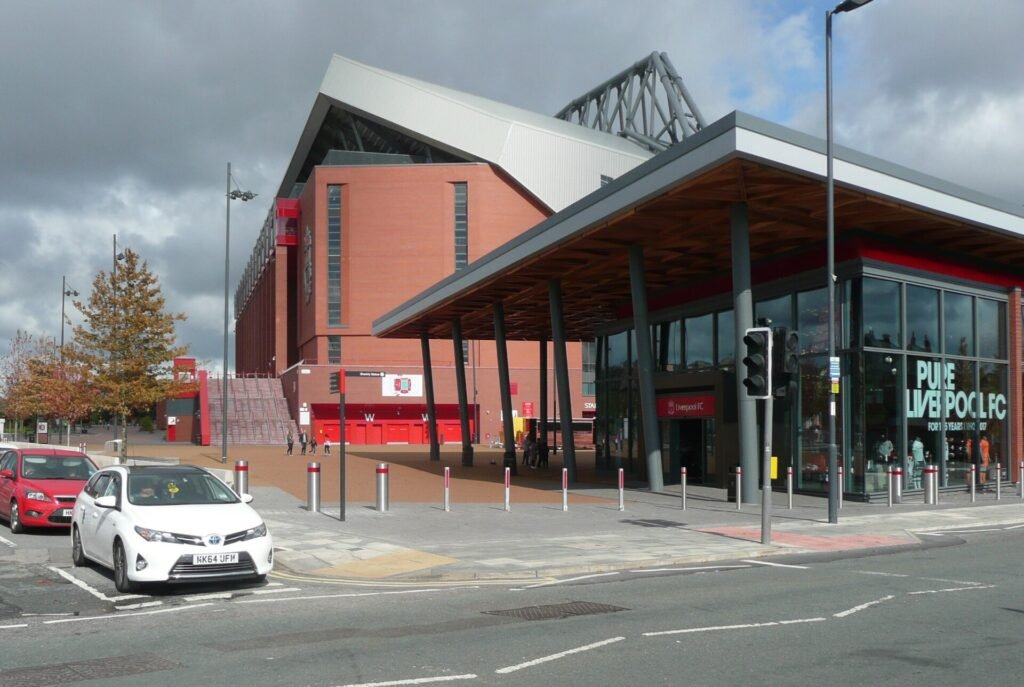
Anfield’s biggest practical challenge has nothing to do with the match itself: there is no railway station directly at the ground, a detail that catches out visitors who assume a stadium of this profile would have one built in. Planning your journey properly matters more here than at almost any other major English ground.
Quick Reference: Anfield Matchday Essentials
| Stage | Key Advice |
|---|---|
| Transport | No station at ground; bus or 20-min walk from Kirkdale/Sandhills |
| Arrival | 90 minutes before kick-off |
| Pre-match tradition | You’ll Never Walk Alone, arrive in time |
| Departure | Allow an hour, no nearby station to rely on |
Before You Travel
Plan your specific transport route in advance rather than assuming a train station exists near the ground, since this is the single most common planning mistake first-time visitors make. Confirm your entrance and turnstile from your ticket ahead of matchday.
Getting to a Ground With No Nearby Station
Kirkdale and Sandhills stations are both around a twenty-minute walk from the stadium, while dedicated matchday buses run from Liverpool city centre and are the option most regular supporters use. Taxis are workable but face significant congestion on the approach roads close to kick-off.
Walking From the City Centre
For supporters staying centrally, walking the full distance takes around forty-five minutes and, for many, is more predictable than waiting for a bus during the busiest pre-match period.
Arriving in Time for the Pre-Match Anthem
Arriving at least ninety minutes before kick-off allows time for the walk or bus journey, security, and finding your seat before the pre-match atmosphere builds. The rendition of You’ll Never Walk Alone immediately before kick-off is a defining part of the experience, and missing it by arriving late is a common regret among first-time visitors.
Moving Around the Stadium
The newer Main Stand and Anfield Road sections offer considerably wider concourses than the older Kop and Sir Kenny Dalglish Stand areas, where half-time queues can be slow. Knowing which stand you are in helps set expectations for how quickly you can realistically get served.
How the Noise Builds
The Kop remains the loudest section by a clear margin, particularly for European nights, while the newer stands offer a calmer, still engaged atmosphere. Choosing your fixture with this in mind shapes how the day feels considerably more than which specific seat you book.
The Journey Back Into Liverpool
With no station at the ground itself, the return journey requires the same planning as the arrival. Allow a full hour to reach onward transport, and consider walking toward the city centre rather than waiting for an overcrowded bus immediately after the final whistle.
What to Pack for a Liverpool Matchday
A charged phone for digital tickets, warm and waterproof clothing given Liverpool’s unpredictable weather, and a card for concourse purchases, since relying on cash throughout the visit can prove inconvenient at several outlets.
Accessible Seating at Anfield
The newer Main Stand and Anfield Road sections offer considerably better accessibility provision than the older Kop and Dalglish Stand areas, reflecting the different eras in which each section was built or rebuilt.
Advice From Regular Visitors
Plan your transport route before travelling rather than assuming a station exists nearby, arrive ninety minutes early to catch the pre-match anthem, and build a full hour into your departure plan given the lack of immediate rail access.
The Shankly Gates and Pre-Match Rituals
The Shankly Gates, positioned near the Kop end and inscribed with the words to You’ll Never Walk Alone, have become a fixed point for supporters to pause and take photographs before a match, and arriving with enough time to stop here rather than rushing straight to the turnstile is worth building into your schedule. The gates carry genuine historical weight as a memorial to Bill Shankly, the manager credited with building the foundations of the club’s modern identity, rather than simply a decorative matchday feature.
Where to Eat Around Anfield
Given the twenty-minute walk from the nearest stations already covered, several long-standing food stalls and pubs have grown up specifically to serve supporters making that journey, offering a more characterful pre-match option than the concourse itself. Booking a table at a pub near the ground in advance is sensible for a popular fixture, since the most well-known options fill quickly in the two hours before kick-off.
The This Is Anfield Sign and Player Rituals
Players from both teams touch the This Is Anfield sign above the tunnel as they walk out, a tradition dating back decades and intended, according to club folklore, to remind visiting players exactly what they are about to face. Supporters near the tunnel entrance get the closest view of this moment, and it remains one of the specific pre-match details that first-time visitors consistently mention as more affecting in person than anything television coverage conveys.
Merseyside Weather and What to Wear
Liverpool’s coastal position means weather can shift quickly during a match, with wind off the Mersey adding a chill that a daytime forecast checked hours before kick-off will not fully capture. Layers that can be added or removed, rather than a single heavy coat, tend to work better across a full ninety minutes plus the extended pre-match window this guide recommends for the anthem.
The Bottom Line on Anfield
Anfield’s matchday experience is rewarding once the transport logistics are understood, and the absence of a nearby station is the one detail that catches out more first-time visitors than anything else about the ground.
📚 From the Blog


Image credit: Humphrey Bolton / Wikimedia Commons (CC BY-SA 2.0)