
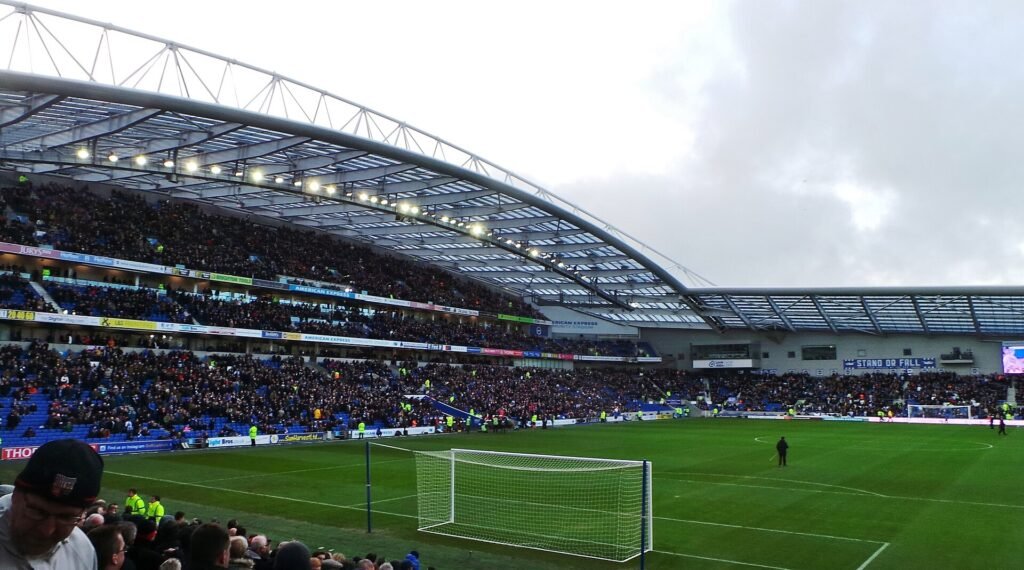
A supporter who has only ever watched football on television arrives at their first live match with a set of assumptions television quietly built without them realising it. Broadcast cameras sit almost exclusively along the side, elevated and central, which is why that viewpoint feels like the “correct” way to watch a match. In person, at almost every stadium, you have to choose between that side-on view and the compressed but electric perspective from behind a goal, and the two experiences are different enough that picking wrong for your priorities can spoil a first visit.
This is not a question with one right answer, and any guide claiming otherwise is oversimplifying a personal trade-off. What this guide can do is set out precisely what you gain and lose with each choice, how the decision should change depending on the specific stadium you are visiting, and how to think about it if you are choosing for the first time.
Quick Comparison: Side Versus Behind the Goal
| Factor | Along the Side | Behind the Goal |
|---|---|---|
| Tactical clarity | Excellent, full width visible | Poor, depth compressed |
| Atmosphere | Moderate, spread out | Highest, concentrated singing |
| Typical price | Higher, especially central | Mid-range to lower |
| Best for | Understanding the match | Experiencing the occasion |
What You Actually See From the Side
A side-on seat, particularly one elevated and central along the halfway line, shows you the full width of the pitch simultaneously. You can see a team’s shape, judge whether a pass beat the defensive line, and understand why territorial pressure is building on one flank rather than another, exactly the kind of read that pundits perform on television, since that is the vantage point they are given.
The trade-off is intensity. Side sections, particularly in the middle tiers of larger stadiums, tend to contain a broader mix of casual attendees, corporate guests and occasional visitors alongside committed regulars, which dilutes the concentrated singing culture that defines the best atmosphere sections at most grounds.
What You Actually See Behind the Goal
Sitting behind a goal compresses your sense of depth considerably: the goal nearest you feels almost directly beneath your seat, while the far end of the pitch recedes into a flatter, harder-to-judge distance. Following a fast counter-attack toward the far goal, or judging an offside call at that end, becomes difficult from this angle in a way it simply is not from the side.
What you gain in exchange is proximity to wherever a club concentrates its most vocal support, which at almost every stadium in this guide’s coverage sits behind one specific goal rather than spread evenly around the ground. The singing is louder, more sustained, and for many supporters this concentrated intensity is the entire reason they attend live football rather than watching from home.
Why Goals Feel More Dramatic From Behind Them
There is behind-the-goal seats consistently rate highly for a specific reason for the emotional peak of a match despite their tactical weaknesses: you see the ball travelling directly toward you, and the goalkeeper’s reaction, the net rippling, the immediate celebration, all happen in your direct eyeline rather than off to one side. For pure emotional impact at the moment of a goal, this position has a real, measurable advantage that side seats cannot replicate.
How the Right Choice Changes by Stadium
At grounds with a famous, historically concentrated atmosphere section, Anfield’s Kop, Dortmund’s Sudtribune, Celtic Park’s North Curve, the behind-the-goal argument becomes considerably stronger, since you are not simply choosing a generic behind-goal seat but specifically buying access to a stadium’s defining feature. At more modern, evenly designed bowls without one dominant atmosphere section, the side-on tactical advantage carries relatively more weight since the atmosphere gap between ends is often smaller.
Researching where a specific stadium concentrates its noise before booking, rather than assuming every ground follows the same pattern, will improve your decision considerably more than applying a single blanket rule across every venue you visit.
The Corner Compromise
Corner sections, where a side stand meets an end stand, offer a middle path between these two extremes. You retain some meaningful depth perception on both goals while sitting close enough to a vocal end section to catch a real share of its singing, and pricing in these blocks typically sits between the pure side and pure behind-goal extremes they border.
For a first-time visitor torn between the two experiences described above, a corner seat is consistently underrated as a way to sample elements of both without fully committing to either trade-off.
Choosing for Children Versus Adults
For young children attending their first match, the side view generally works better: the fuller sense of the whole pitch is easier for a child to follow, and the standing, singing culture common to behind-goal sections can be overwhelming or simply mean a small child cannot see over the crowd. For an adult attending specifically for the atmosphere and occasion, behind the goal remains the stronger recommendation.
What Away Supporters Typically Experience
Away allocations at most stadiums covered in this guide sit behind a goal or in a corner instead of along the side, a pattern driven by which sections are easiest to segregate from the home crowd instead of any deliberate attempt to give visiting fans a worse tactical view. This means away supporters frequently experience the behind-the-goal trade-off by default, regardless of whether they would have chosen it, which is worth knowing if you are travelling specifically to support the visiting team.
The upside is that away sections, precisely because they draw the away club’s most committed travelling support, tend to be among the loudest sections in any ground regardless of which end they occupy, often rivalling or exceeding the home crowd’s own atmosphere section for sheer noise per supporter.
How Broadcasters’ Camera Position Shapes Expectations
The main broadcast camera at almost every major stadium sits along the side, elevated and roughly central, which is why the side-on view feels instinctively “correct” to anyone who has watched more football on television than in person. Understanding that this is a broadcasting choice rather than an objectively superior viewing angle helps explain why so many first-time visitors are surprised by how different, and for many, how much more enjoyable, the behind-the-goal perspective feels once experienced directly instead of through a screen.
Tips for Making the Right Call
Ask yourself honestly what you are attending for. If understanding the tactical detail of the match matters more to you than the occasion around it, book a side seat, ideally elevated. If experiencing the noise and being part of a stadium’s defining atmosphere is the priority, book behind the goal at whichever end carries that reputation. If you cannot decide, a corner seat offers a reasonable compromise worth considering before defaulting to either extreme.
How Ticket Availability Differs Between the Two
Behind-the-goal sections at a club’s most famous atmosphere end are consistently the hardest tickets to obtain as a visiting neutral, since a significant share of that allocation goes to season ticket holders and members with an established attendance history specific to that section. Side seats, particularly in upper tiers away from the most premium halfway-line blocks, tend to offer a more realistic route to a confirmed booking for a first-time visitor without that history.
This practical reality means that even a supporter who would ideally choose the atmosphere end may find themselves booking a side seat simply because it is what is actually available, a compromise worth accepting rather than delaying a visit indefinitely while waiting for a specific section to open up.
A Note on Noise Levels and Hearing Comfort
Sustained standing sections behind a goal at the loudest grounds can reach a volume that some visitors, particularly those unaccustomed to live sporting events, find uncomfortable rather than simply exciting. Ear protection is not unusual among regular attendees at the most intense atmosphere sections, and there is no shame in choosing a side seat specifically to avoid a noise level that does not suit you personally.
How Weather Changes the Calculation
Wind affects behind-the-goal seats more noticeably than side seats at most open-ended stadiums, since a swirling crossfield gust is felt most sharply at the exact point where the ball travels toward you rather than across your field of view. On a genuinely wet evening, side seats under a deeper overhanging roof often stay drier than exposed behind-goal blocks at older grounds, a practical factor worth weighing alongside the tactical and atmosphere arguments already covered.
What Long-Time Season Ticket Holders Eventually Choose
Supporters who have held a season ticket for a decade or more, when surveyed informally by club fan groups, show a consistent pattern: a meaningful share who started behind the goal for the atmosphere eventually move to a side seat as their priorities shift toward comfort and a fuller view of the match, while very few make the opposite move once they have experienced a concentrated atmosphere section. This is not a universal rule, since plenty of long-serving supporters stay loyal to their original end for decades, but it does suggest the trade-off in this guide is one that can genuinely change with age and how many matches a person has already attended.
Overall Recommendation
Neither position is objectively superior, and any supporter who insists otherwise is usually describing their own priority rather than a universal truth about football viewing. Know what you are chasing before you book, research where the specific stadium concentrates its atmosphere, and choose accordingly rather than defaulting automatically to whichever seat happens to be cheapest or most available at the time.
📚 From the Blog



Image credit: Gareth Williams from Redhill, England / Wikimedia Commons (CC BY 2.0)