
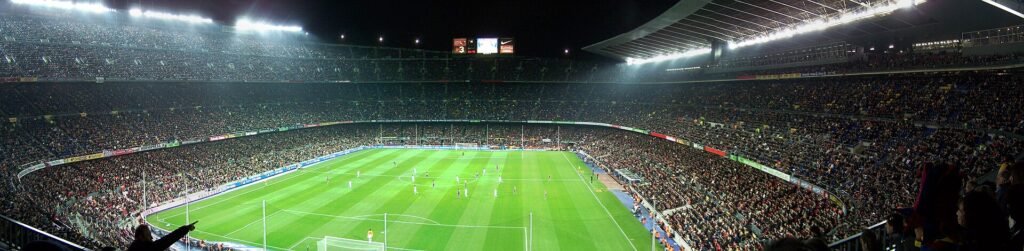
Europe has some of the largest sports grounds anywhere in the world. A few of them hold more people than small towns. On a matchday, one of these stadiums can fill up with the population of an entire district, all sitting down to watch the same game at the same time. The scale is difficult to comprehend until you are standing inside one of them, surrounded by tens of thousands of people all focused on the same ninety minutes of action.
This guide walks through the ten biggest football stadiums in Europe by seated capacity. For each one, you will find out how many people it holds, who plays there, why it got so big in the first place, and what it is actually like to sit inside it. Size on paper and size in person are two different things, and some of these grounds feel much bigger than the numbers suggest. We have visited every stadium on this list and ranked them based on capacity, atmosphere, accessibility, and the overall matchday experience.
One thing worth saying at the start. Capacity numbers move around. Clubs add seats, remove seats, close sections for building work, or change standing areas into seating for certain competitions. So the figures here are close, but you may see slightly different numbers on other sites. That is normal, and the reasons are explained in detail near the end of this guide. The numbers we use are the most recent official figures available as of 2026.
Whether you are planning a trip to see one of these grounds in person or simply curious about the engineering and history behind them, this guide gives you everything you need to know. We cover not just the raw numbers but the practical reality of visiting each stadium, the atmosphere on matchday, and the unique features that make each ground distinctive.
Quick Comparison: Europe’s Biggest Stadiums at a Glance
Before diving into the detailed reviews, here is a quick comparison of all ten stadiums to help you understand the landscape at a glance. This table shows the official capacity, the year each stadium opened or was last rebuilt, and the primary tenant or use case.
| Stadium | City | Capacity | Opened/Rebuilt | Primary Use |
|---|---|---|---|---|
| Camp Nou | Barcelona | ~99,000 | 1957 (redeveloping) | FC Barcelona |
| Wembley Stadium | London | 90,000 | 2007 | England national team |
| Signal Iduna Park | Dortmund | 81,000 (66,000 Europe) | 1974 (expanded) | Borussia Dortmund |
| Stade de France | Paris | ~80,000 | 1998 | France national team |
| Santiago Bernabeu | Madrid | ~78,000 | 1947 (rebuilt 2024) | Real Madrid |
| San Siro | Milan | ~75,000 | 1926 | AC Milan & Inter Milan |
| Allianz Arena | Munich | 75,000 (66,000 Europe) | 2005 | Bayern Munich |
| Old Trafford | Manchester | ~74,000 | 1910 (expanded) | Manchester United |
| Ataturk Olympic Stadium | Istanbul | ~74,000 | 1999 | Occasional finals |
| Tottenham Hotspur Stadium | London | ~62,000 | 2019 | Tottenham Hotspur |
As you can see, the range is significant — from Camp Nou’s nearly 99,000 down to Tottenham’s 62,000. But capacity alone does not tell the whole story. Signal Iduna Park, for example, feels louder and more intense than several stadiums that hold significantly more people. The Stade de France and Wembley are national stadiums that rarely host club football, which gives them a very different character from the club grounds. And the Ataturk Olympic Stadium, despite its size, is rarely used at full capacity.
1. Camp Nou, Barcelona
Camp Nou holds close to 99,000 people when it is fully open, which makes it the biggest football ground in Europe and one of the biggest in the world. It opened in 1957 and has been expanded several times since, growing from its original capacity of around 90,000 to its current size through a series of incremental additions. The stadium has never been rebuilt from scratch — it has simply grown organically as the club’s popularity and membership numbers increased.
Capacity and History
The reason Camp Nou grew so large is simple. Barcelona is a huge club with a membership system that gives supporters a direct stake in the club’s governance, and for decades the demand for seats was far higher than the space available. Rather than move to a new location, the club kept building upwards and outwards. The result is a bowl with three steep tiers, and the top tier is high enough that players look small from up there. The third tier, known as the “Gol Nord” and “Gol Sud” sections, was added in the 1990s and pushed the capacity past 98,000 for the first time.
The stadium has hosted some of the most significant matches in football history, including the 1982 World Cup opening ceremony, the 1992 Olympic football final, and four European Cup and Champions League finals. It has also been the venue for concerts by artists like Bruce Springsteen, U2, and Coldplay, demonstrating its versatility as a multi-purpose venue. The club’s museum, located within the stadium complex, is one of the most visited museums in Catalonia, attracting over a million visitors annually.
What It’s Like Inside
When Camp Nou is full, the scale is the memorable part. You do not really take in how many people 99,000 is until you are standing in the middle of them. The atmosphere varies depending on the occasion — routine league games can feel surprisingly quiet for a stadium of this size, but Champions League nights and El Clasico matches transform the building into one of the most intimidating venues in world football. The acoustics are not ideal for trapping sound, as the open design allows noise to escape, but the sheer number of voices can still create an overwhelming wall of sound on big occasions.
The sightlines are generally good throughout the stadium, though the very top rows of the third tier are a long way from the pitch. The steepness of the stands helps compensate for this, as even the highest seats have a relatively direct view of the action. The pitch itself is in excellent condition, with a hybrid grass system that combines natural turf with synthetic fibres for durability. The drainage system is among the best in Europe, meaning matches rarely suffer from waterlogging even in heavy rain.
Visiting and Practical Info
The ground is currently going through a major redevelopment known as the “Espai Barca” project, which will modernise the stadium while increasing capacity to over 105,000. Sections have been closed at different times while the work continues, and the club has played some games at the Estadi Olimpic Lluis Companys during the renovation. If you are planning a visit, check what stage the building work has reached, because both the capacity and the parts of the ground you can access change from season to season. The redevelopment is expected to be completed by 2026.
Camp Nou is served by the L3 and L5 metro lines, with Collblanc and Badal stations both within walking distance. The stadium is also accessible by bus, and there is a dedicated tourist bus stop nearby. If you are driving, parking is available but expensive and often full on matchdays, so public transport is strongly recommended. The stadium tour is one of the most popular in Europe, combining access to the pitchside, dressing rooms, and museum with an audio guide available in multiple languages.
2. Wembley Stadium, London
Wembley holds 90,000 and is the national stadium of England. It is the largest ground in the United Kingdom and the second largest in Europe. The current stadium opened in 2007, replacing the old Wembley that had stood since 1923. The old ground was famous for its twin towers, which became an iconic symbol of English football. The new one is famous for its arch, which is 133 metres tall and can be seen from a long way across London. The arch is not just decorative — it supports the entire roof structure, eliminating the need for supporting columns that would obstruct views.
Capacity and History
Unlike most grounds on this list, Wembley is not the home of a club. It hosts England internationals, cup finals, playoff finals and major events. That changes the feel of it fundamentally. The crowd is drawn from all over the country rather than one city, so it never has the settled, familiar atmosphere of a club ground where the same people sit in the same seats every week. Instead, Wembley is about occasions — specific days that carry extra weight because of what is at stake. An FA Cup final at Wembley is a different experience from a league match at any club ground, regardless of size.
The stadium has hosted some of the most significant sporting events in British history, including the 2012 Olympic football finals, multiple Champions League finals, and the 2007 Rugby World Cup. It has also been a venue for major concerts, with artists like Adele, Beyonce, and Ed Sheeran performing to sold-out crowds. The versatility of the design means it can accommodate football, rugby, athletics, and entertainment events with minimal reconfiguration.
What It’s Like Inside
The upside is that when Wembley does get a proper occasion, such as an FA Cup final or a playoff final, it is one of the great days out in football. Both sets of supporters have travelled, both care enormously, and the ground is designed to handle a crowd that size comfortably. The sightlines are excellent throughout, with no obstructed views and a consistent rake that ensures even the highest seats have a good angle on the pitch. The roof covers all seats, which is a significant improvement over the old Wembley where weather could be a factor.
The atmosphere at Wembley is unique. Because the crowd is a mix of supporters from different clubs and regions, the noise level can vary dramatically depending on the occasion. A playoff final between two passionate fanbases can produce an electric atmosphere, while a routine international friendly might feel surprisingly muted. The acoustics are better than many modern stadiums, as the roof design helps trap and reflect sound back onto the pitch. The royal box, where trophies are presented, is one of the most photographed spots in English football.
Visiting and Practical Info
Wembley Park station is directly outside the stadium on the Jubilee and Metropolitan lines. The journey from central London takes approximately twenty minutes. There is also a dedicated shuttle bus service from central London on event days, but this does not run on non-event days. If you are driving, there is parking available but it is expensive and often full on event days, so public transport is strongly recommended. The stadium is located in north-west London, and the surrounding area has been redeveloped as part of the Wembley regeneration project, with new restaurants, bars, and retail spaces.
The stadium tour is one of the most popular in England, offering access to the dressing rooms, tunnel, pitchside, and royal box. The tour includes a visit to the England dressing room, where you can see the tactical boards and the seats where managers sit during matches. The museum section covers the history of English football, from the first FA Cup final in 1872 to the present day. Photography is permitted throughout the tour, and there are several excellent photo opportunities, particularly from the royal box and the pitchside area.
3. Signal Iduna Park, Dortmund
Borussia Dortmund’s ground holds around 81,000 for domestic league games. That figure includes the famous south terrace, which holds roughly 25,000 standing supporters and is the largest standing section in world football. The terrace is known as the “Yellow Wall” because of the colour of the shirts and flags packed into it. When it moves and sings together, it is one of the most striking sights in the sport. The visual impact of 25,000 people in yellow, all moving in unison, is something that photographs and videos simply cannot capture.
Capacity and History
Germany kept standing terraces when England removed them after the Taylor Report, and Signal Iduna Park is the clearest example of what that decision looks like in practice. The terrace was created in the 1990s when the stadium was expanded, and it has become the defining feature of the ground. The standing section is not just about capacity — it is about atmosphere. The density of supporters, the proximity to the pitch, and the shared experience of standing together create an intensity that seated sections simply cannot match.
The stadium opened in 1974 as the Westfalenstadion and was renamed Signal Iduna Park in 2005 following a sponsorship deal. It has been expanded several times, most significantly in the 1990s when the south stand was converted to standing. The stadium hosted matches during the 1974 and 2006 World Cups, as well as the 2001 UEFA Cup final. It is widely regarded as one of the best atmospheres in world football, and it regularly features at the top of lists ranking the best matchday experiences in Europe.
What It’s Like Inside
There is a catch worth knowing. For European competition, standing is not permitted under UEFA regulations, so the terrace converts into seating. That drops the capacity to around 66,000 and changes the atmosphere significantly. The Yellow Wall becomes a seated section, and while it is still impressive, it lacks the intensity and movement of the standing configuration. If you want the full Signal Iduna Park experience, a domestic league game is the one to pick. The difference between a Bundesliga match and a Champions League match at this stadium is night and day.
Dortmund is also one of the cheapest big grounds in Europe to visit, which makes the combination of size, noise and price hard to beat. Ticket prices for Bundesliga matches are among the lowest in top-flight European football, with standing tickets available for as little as €15. This pricing policy is deliberate — the club believes that football should be accessible to working-class supporters, and it has resisted the trend of rising ticket prices that has affected many other European clubs. The result is a crowd that is diverse, passionate, and deeply connected to the club.
Visiting and Practical Info
Signal Iduna Park is served by the Dortmund Stadtbahn (light rail) system, with the Westfalenhallen stop directly outside the stadium. The journey from Dortmund city centre takes approximately ten minutes. There is also a dedicated bus service from the city centre on matchdays, and several other bus lines stop nearby. If you are driving, there is parking available but it fills up quickly on matchdays, so public transport is recommended. The stadium is located in the south of Dortmund, and the surrounding area has several pubs and restaurants that are popular with fans before and after matches.
The stadium tour is available on non-matchdays and includes access to the dressing rooms, tunnel, pitchside, and the Yellow Wall. The tour explains the history of the stadium, the significance of the standing terrace, and the club’s approach to ticket pricing. Photography is permitted throughout the tour, and the Yellow Wall is the most popular photo spot. The stadium shop is located at the end of the tour route, and it sells a wide range of Borussia Dortmund merchandise. The tour is wheelchair accessible on most of the route, though the standing terrace is not accessible for visitors with mobility impairments.
4. Stade de France, Paris
The Stade de France holds around 80,000 in its football configuration, which technically places it higher on the list than several club grounds. It is included here at number four because, like Wembley, it is a national stadium rather than a club ground. It was built for the 1998 World Cup, which France went on to win in this stadium with a 3-0 victory over Brazil in the final. That match remains one of the most iconic moments in French sporting history, and the stadium was designed specifically to host that occasion.
Capacity and History
The Stade de France also hosts rugby internationals and athletics, and the pitch sits inside a running track configuration that can be adjusted. The lower tier of seats can be moved to accommodate different sports, which is an engineering feat that few stadiums in the world can match. The stadium was designed by a consortium of architects led by Michel Macary, Aymeric Zublena, Michel Regembal, and Claude Costantini, and it won several awards for its innovative design. The roof is a distinctive elliptical shape that covers all seats while allowing natural light to reach the pitch.
Beyond the 1998 World Cup final, the stadium has hosted the 2000 UEFA Champions League final, the 2006 UEFA Champions League final, and the 2022 UEFA Champions League final. It has also been a venue for major concerts, with artists like Rihanna, Coldplay, and Ed Sheeran performing to sold-out crowds. The stadium is located in the suburb of Saint-Denis, north of central Paris, and it is easily accessible by public transport. The surrounding area has been redeveloped as part of the Plaine Saint-Denis regeneration project, with new residential and commercial spaces.
What It’s Like Inside
That flexible design is also its weakness for football. The stands are further from the pitch than at a purpose-built football ground, which affects both the view and the atmosphere. The running track creates a gap between the spectators and the action that can make even a full stadium feel less intimate than a smaller club ground. This is a common criticism of multi-purpose stadiums, and the Stade de France is no exception. For rugby and athletics, the design works well, but for football it is not ideal.
The atmosphere at the Stade de France varies depending on the occasion. For France national team matches, the stadium can be electric, particularly for high-stakes games like World Cup qualifiers or European Championship matches. For club finals, the atmosphere depends on the fanbases involved — a Champions League final between two passionate clubs can produce an incredible atmosphere, while a less high-profile match might feel muted. The acoustics are reasonable, with the roof design helping to trap and reflect sound, but the distance from the stands to the pitch remains a limiting factor.
Visiting and Practical Info
The Stade de France is served by the RER B and RER D lines, with the La Plaine-Stade de France and Stade de France-Saint-Denis stations both within walking distance. The journey from central Paris takes approximately fifteen minutes. There is also a dedicated bus service from the city centre on event days, and several other bus lines stop nearby. If you are driving, there is parking available but it is expensive and often full on event days, so public transport is strongly recommended. The stadium is located in the suburb of Saint-Denis, and the surrounding area has several restaurants and bars that are popular with fans before and after events.
The stadium tour is available on non-event days and includes access to the dressing rooms, tunnel, pitchside, and the presidential box. The tour explains the history of the stadium, the engineering behind the movable lower tier, and the famous matches that have been hosted here. Photography is permitted throughout the tour, and there are several excellent photo opportunities, particularly from the pitchside area and the presidential box. The stadium shop is located at the end of the tour route, and it sells a range of French football and rugby merchandise. The tour is wheelchair accessible on most of the route, and the stadium is fully accessible for visitors with mobility impairments.
5. Santiago Bernabeu, Madrid
Real Madrid’s ground holds around 78,000 following its recent rebuild. The stadium first opened in 1947 and has been redeveloped several times, most dramatically in the last few years. The recent renovation, which was completed in 2024, transformed the stadium from a traditional football ground into one of the most technologically advanced venues in the world. The exterior is now wrapped in a curved metal shell that gives the building a futuristic appearance, and the interior has been completely reconfigured to improve sightlines, comfort, and accessibility.
Capacity and History
The recent work wrapped the outside in a curved metal shell, added a retractable roof, and installed a pitch that can be moved below ground so the venue can host concerts and other events without damaging the grass. It is one of the most technically ambitious stadium projects ever attempted, with a budget of over €1 billion. The retractable roof can be opened or closed in approximately fifteen minutes, and the movable pitch system allows the stadium to switch between football and entertainment configurations in a matter of hours. The exterior shell is made of stainless steel and glass, and it is designed to be illuminated at night, creating a striking visual landmark on the Madrid skyline.
The Bernabeu has hosted four European Cup and Champions League finals, more than any other stadium in Europe. It has also been a venue for the 1982 World Cup, the 1964 European Championship, and numerous other major sporting events. The stadium’s museum is one of the most visited in Spain, attracting over a million visitors annually. The museum covers the club’s history from its founding in 1902 to the present day, and it includes original match-worn shirts, trophies, photographs, and video footage from the club’s most famous matches. The trophy room alone is worth the price of admission, with fourteen European Cup trophies displayed alongside dozens of domestic and international honours.
What It’s Like Inside
Inside, the stands are steep and tall. The upper tiers give you a full view of the pitch but sit a long way from it. If you dislike heights, the very top of the Bernabeu is not the place to book. The new configuration has improved sightlines throughout the stadium, with the removal of supporting columns that previously obstructed views in some sections. The seats are wider and more comfortable than in the old configuration, and the concourses have been widened to reduce congestion during peak times. The new roof covers all seats, which is a significant improvement over the old stadium where weather could be a factor.
The ground has a reputation for being quiet during routine league games, and Real Madrid supporters are known for being demanding of their own team. The atmosphere at the Bernabeu is often described as “businesslike” — the crowd is engaged and knowledgeable, but it does not produce the same level of sustained noise as some other European stadiums. On a Champions League knockout night, it is a completely different building. The occasion brings out the best in the crowd, and the atmosphere can be electric. The new roof design helps trap and reflect sound, which should improve the atmosphere for future matches.
Visiting and Practical Info
Santiago Bernabeu metro station is directly outside the stadium on Line 10, which makes it one of the easiest attractions in Madrid to reach. The station has been renamed “Santiago Bernabeu” from its former name, so look for the stadium signage. Multiple bus lines also stop nearby, and the stadium is within walking distance of the city centre if you are staying in the central districts. If you are driving, there is parking available but it is expensive and often full on matchdays, so public transport is strongly recommended. The stadium is located on the Paseo de la Castellana, one of the main thoroughfares in Madrid, and the surrounding area has several restaurants and bars that are popular with fans before and after matches.
The stadium tour is one of the most popular in Europe, offering access to the dressing rooms, tunnel, pitchside, and trophy room. The tour includes a visit to the new interactive areas, which feature virtual reality experiences and touch-screen displays that allow you to explore the club’s history in detail. The tour is available with audio guides in English, Spanish, French, German, Italian, Portuguese, Russian, Arabic, Chinese, and Japanese. Photography is permitted throughout the tour, and there are several designated photo spots that offer excellent views of the pitch and the stands. The stadium shop is located at the end of the tour route, and it is one of the largest club shops in Europe.
6. San Siro, Milan
The San Siro holds around 75,000 and is shared by two clubs, AC Milan and Inter Milan. That sharing arrangement is unusual for a ground of this size and gives it a split identity. The stadium is officially named the Stadio Giuseppe Meazza, after the Italian footballer who played for both clubs, but it is universally known as the San Siro after the district of Milan where it is located. The dual identity is reflected in the stadium’s decoration — when AC Milan is at home, the stadium is adorned in red and black, and when Inter Milan is at home, it is adorned in blue and black.
Capacity and History
It opened in 1926 and has been expanded repeatedly. The most recognisable feature is the set of spiral ramps on the outside corners, which carry supporters up to the higher tiers. The ramps were designed by the architect Ulisse Stacchini, and they are an iconic feature of the building. Walking up the ramps gives you a view over the city of Milan and a sense of the scale of the stadium that you cannot get from the inside. The ramps are also a popular photo spot, and many visitors take pictures here before or after matches. The third tier, known as the “Gods” section, is exceptionally steep and high, and from the back row the players look very small indeed.
The San Siro has hosted four European Cup and Champions League finals, including the famous 2016 final between Real Madrid and Atletico Madrid. It has also been a venue for the 1990 World Cup, the 1980 European Championship, and numerous other major sporting events. The stadium’s museum covers the history of both AC Milan and Inter Milan, and it is divided into two sections, one for each club. Seeing two rival histories presented side by side in one building is genuinely interesting, and it is something no other stadium museum offers. The museum includes original match-worn shirts, trophies, photographs, and video footage from both clubs’ most famous matches.
What It’s Like Inside
Because two clubs use it, the decoration and the atmosphere change depending on who is at home. Visiting for a Milan game and visiting for an Inter game are genuinely different experiences, even though the building is identical. The Milan supporters occupy the Curva Sud, while the Inter supporters occupy the Curva Nord, and each section has its own character and traditions. The atmosphere at the San Siro is among the best in Italy, with both sets of supporters known for their passionate and vocal support. The steepness of the stands helps create an intense atmosphere, as the noise is trapped and reflected back onto the pitch.
The ground is old and the facilities show it. Both clubs have spent years discussing a replacement, so the San Siro may not be on this list forever. The proposed new stadium would be built adjacent to the current ground, and the San Siro would be demolished or repurposed. The debate over the new stadium has been ongoing for several years, with disagreements between the clubs, the city council, and heritage organisations over the fate of the existing building. If you are interested in football architecture and history, this is a stadium you should visit while it is still standing.
Visiting and Practical Info
The San Siro is served by the M5 metro line, with the San Siro Stadio stop directly outside the stadium. The journey from central Milan takes approximately twenty minutes. There is also a dedicated tram service from the city centre, and several bus lines stop nearby. If you are driving, there is parking available but it fills up quickly on matchdays, so public transport is recommended. The stadium is located in the San Siro district of Milan, and the surrounding area has several restaurants and bars that are popular with fans before and after matches. The area is relatively quiet on non-matchdays, but it comes alive on matchdays with fans from both clubs.
The stadium tour is available on non-matchdays and includes access to the dressing rooms, tunnel, pitchside, and museum. The tour explains the history of both clubs, the architecture of the stadium, and the famous matches that have been played here. The tour is available in English, Italian, Spanish, French, German, and Portuguese, with audio guides available in additional languages. Photography is permitted throughout the tour, and the spiral ramps are the most popular photo spot. The stadium shop is located at the end of the tour route, and it sells merchandise for both AC Milan and Inter Milan. The shop is divided into two sections, one for each club, so you can find merchandise for whichever team you support.
7. Allianz Arena, Munich
Bayern Munich’s home holds 75,000 for domestic games and opened in 2005. It is best known for its exterior, which is made of inflated cushioned panels that light up in colour. For Bayern games it glows red, and approaching it at night is genuinely impressive. The panels are made of ETFE, a material that is also used in the Beijing Water Cube, and they are designed to withstand extreme weather conditions. The lighting system can produce over 16 million colour combinations, and it is used to create spectacular displays before and after matches. The exterior has become one of the most recognisable stadium facades in the world.
Capacity and History
The Allianz Arena was built to replace the Olympiastadion, which had been Bayern Munich’s home since 1972. The Olympiastadion was built for the 1972 Olympics and was not ideal for football, with a running track that created a gap between the spectators and the pitch. The Allianz Arena was designed specifically for football, with steep stands that are close to the pitch and a roof that covers all seats. The stadium was designed by the architects Herzog & de Meuron, who are also known for their work on the Tate Modern in London and the Bird’s Nest stadium in Beijing. The stadium cost approximately €340 million to build, and it was funded jointly by Bayern Munich and TSV 1860 Munich, although TSV 1860 sold its share to Bayern in 2006.
The Allianz Arena has hosted the 2006 World Cup opening match, the 2012 Champions League final, and the 2020 UEFA Super Cup. It has also been a venue for major concerts, with artists like Coldplay, Ed Sheeran, and Taylor Swift performing to sold-out crowds. The stadium’s museum covers the history of Bayern Munich from its founding in 1900 to the present day, and it includes original match-worn shirts, trophies, photographs, and video footage from the club’s most famous matches. The museum is one of the largest club museums in Europe, and it is included in the stadium tour price.
What It’s Like Inside
Inside, the tiers are steep and close to the pitch, which makes it feel more compact than the capacity suggests. There is a standing terrace behind one goal for league matches, which converts to seating for European games in the same way Dortmund’s does. The standing terrace, known as the “Sudkurve,” is home to Bayern’s most vocal supporters, and it produces an intense atmosphere during league matches. The sightlines are excellent throughout the stadium, with no obstructed views and a consistent rake that ensures even the highest seats have a good angle on the pitch. The roof covers all seats, which is a significant improvement over the Olympiastadion where weather could be a factor.
The ground is well organised, easy to reach on the underground, and the food and drink are reasonably priced by European standards. It is one of the simplest large stadiums in Europe to visit for the first time. The concourses are wide and well signposted, and the facilities are modern and clean. The one criticism is that Bayern often win comfortably, which can take the tension out of the second half of ordinary league games. The atmosphere at the Allianz Arena is generally good, but it does not reach the intensity of some other European stadiums, particularly during routine league matches.
Visiting and Practical Info
The U6 underground line runs to Frottmaning, from which it is a short walk. Everything about visiting is straightforward. The journey from central Munich takes approximately twenty minutes, and the U6 line runs every five to ten minutes during peak hours. There is also a dedicated bus service from the city centre, and several other bus lines stop nearby. If you are driving, there is parking available but it fills up quickly on matchdays, so public transport is recommended. The stadium is located in the north of Munich, and the surrounding area has several restaurants and bars that are popular with fans before and after matches. The area is relatively quiet on non-matchdays, but it comes alive on matchdays with Bayern supporters.
The stadium tour is available on non-matchdays and includes access to the dressing rooms, tunnel, pitchside, and museum. The tour explains the history of Bayern Munich, the architecture of the stadium, and the famous matches that have been played here. The tour is available in English, German, Spanish, French, Italian, Portuguese, Arabic, Chinese, and Japanese, with audio guides available in additional languages. Photography is permitted throughout the tour, and the exterior panels are the most popular photo spot, particularly when they are lit up at night. The stadium shop is located at the end of the tour route, and it is one of the largest club shops in Germany. The tour is wheelchair accessible on most of the route, and the museum is fully accessible for visitors with mobility impairments.
8. Old Trafford, Manchester
Old Trafford holds around 74,000, making it the largest club ground in England. It opened in 1910 and has been expanded many times, most significantly in the 1990s and 2000s. The stadium is known as the “Theatre of Dreams,” a nickname coined by the legendary Manchester United player Bobby Charlton. The nickname reflects the stadium’s reputation as a place where great football has been played and where dreams have been realised. Old Trafford has hosted more top-flight matches than any other stadium in England, and it has been the home of Manchester United for over a century.
Capacity and History
The Sir Alex Ferguson Stand is the tallest part and dominates the skyline around the ground. The Stretford End behind one goal holds the most vocal home supporters, and it is known for its passionate and vocal support. The stadium has been unable to grow much further because a railway line runs alongside one side, limiting how much that stand can be extended. That constraint is a big part of why Manchester United have discussed either a major redevelopment or a new stadium entirely. The proposed new stadium would be built adjacent to the current ground, and Old Trafford would be demolished or repurposed. The debate over the new stadium has been ongoing for several years, with disagreements between the club, the city council, and heritage organisations over the fate of the existing building.
Old Trafford has hosted the 1966 World Cup, the 1996 European Championship, the 2003 Champions League final, and the 2022 Women’s European Championship final. It has also been a venue for major concerts, with artists like Bruce Springsteen, U2, and Coldplay performing to sold-out crowds. The stadium’s museum covers the history of Manchester United from its founding in 1878 to the present day, and it includes original match-worn shirts, trophies, photographs, and video footage from the club’s most famous matches. The museum is one of the oldest club museums in the world, opening in 1986, and it has a genuinely strong collection that covers every era of the club’s history.
What It’s Like Inside
Parts of the ground are now visibly ageing. Concourses in the older stands are tight, and there are seats with restricted views caused by supporting pillars. The scale and the history still make it worth seeing, but the stadium is in need of modernisation. The Sir Alex Ferguson Stand, which was built in the 1990s, is the most modern part of the stadium, while the East Stand, which dates back to the 1970s, is the oldest and most in need of renovation. The pitch is in excellent condition, with a hybrid grass system that combines natural turf with synthetic fibres for durability. The drainage system is among the best in England, meaning matches rarely suffer from waterlogging even in heavy rain.
The atmosphere at Old Trafford is generally good, but it does not reach the intensity of some other European stadiums. The crowd is knowledgeable and engaged, but it can be quiet during routine league matches, particularly when the team is struggling. On big occasions, such as Champions League nights or derby matches against Manchester City, the atmosphere can be electric. The Stretford End is the most vocal section, and it produces an intense atmosphere during high-stakes matches. The sightlines are generally good throughout the stadium, though some seats in the older stands have restricted views due to supporting pillars.
Visiting and Practical Info
Old Trafford is served by the Metrolink tram system, with the Old Trafford stop directly outside the stadium. Trams run from Manchester city centre every six to twelve minutes, and the journey takes approximately fifteen minutes. The stadium is also accessible by bus, with several routes stopping nearby. If you are driving, there is parking available but it fills up quickly on matchdays, so public transport is the recommended option. The stadium is located in the Trafford district of Manchester, and the surrounding area has several pubs and restaurants that are popular with fans before and after matches. The area is relatively quiet on non-matchdays, but it comes alive on matchdays with Manchester United supporters.
The stadium tour is one of the most popular in England, offering access to the dressing rooms, tunnel, pitchside, and museum. The tour explains the history of Manchester United, the architecture of the stadium, and the famous matches that have been played here. The tour is available with audio guides in English, Spanish, French, German, Italian, Portuguese, Arabic, Chinese, and Japanese. Photography is permitted throughout the tour, and there are several excellent photo opportunities, particularly from the tunnel and the dugout. The stadium shop is located at the end of the tour route, and it is one of the largest club shops in England. The tour is wheelchair accessible on most of the route, though some sections of the museum may have limited accessibility due to the age of the building.
9. Ataturk Olympic Stadium, Istanbul
The Ataturk holds around 74,000 and was built for Istanbul’s Olympic bid. It is best known internationally for hosting the 2005 Champions League final, one of the most famous matches in the competition’s history. That match, between AC Milan and Liverpool, is remembered for Liverpool’s remarkable comeback from 3-0 down at half-time to win on penalties. The Ataturk was also the venue for the 2023 Champions League final, which was moved from Saint Petersburg to Istanbul following the Russian invasion of Ukraine. The stadium’s role in hosting these two iconic finals has cemented its place in football history.
Capacity and History
Unlike most grounds on this list, it is not the regular home of a major club. It is used for finals, national team games and occasional big fixtures, which means it is often empty. The stadium was built as part of Istanbul’s bid for the 2008 Olympics, which was ultimately awarded to Beijing. The bid was unsuccessful, but the stadium remains as a legacy of the city’s Olympic ambitions. The stadium is named after Mustafa Kemal Ataturk, the founder of modern Turkey, and it is one of the largest stadiums in the country. The stadium has also hosted the 2009 UEFA Super Cup, the 2010 European Athletics Championships, and numerous other sporting events.
The Ataturk Olympic Stadium was designed by the architects Bahadir Kul and Mehmet Ali Ulusan, and it features a distinctive roof design that covers all seats. The stadium cost approximately €130 million to build, and it was funded by the Turkish government. The stadium’s location, some distance outside the city centre, was chosen to allow for future expansion and development. The surrounding area has been redeveloped as part of the Olympic Park project, with new residential and commercial spaces. The stadium is also used for concerts and other entertainment events, with artists like Madonna, Rihanna, and Coldplay performing to sold-out crowds.
What It’s Like Inside
The ground sits some distance outside the city centre, and transport on major matchdays has been a recurring problem. For visitors, that is the main practical thing to plan around. The stadium is located in the Basaksehir district of Istanbul, and the journey from the city centre can take up to an hour by public transport. The stadium is served by the M9 metro line, with the Olimpiyat stop within walking distance. There is also a dedicated bus service from the city centre on event days, and several other bus lines stop nearby. If you are driving, there is parking available but it fills up quickly on event days, so public transport is recommended.
The atmosphere at the Ataturk Olympic Stadium varies depending on the occasion. For Turkish national team matches, the stadium can be electric, particularly for high-stakes games like World Cup qualifiers or European Championship matches. For club finals, the atmosphere depends on the fanbases involved — a Champions League final between two passionate clubs can produce an incredible atmosphere, while a less high-profile match might feel muted. The sightlines are excellent throughout the stadium, with no obstructed views and a consistent rake that ensures even the highest seats have a good angle on the pitch. The roof covers all seats, which is a significant improvement over older stadiums where weather could be a factor.
Visiting and Practical Info
The Ataturk Olympic Stadium is served by the M9 metro line, with the Olimpiyat stop within walking distance. The journey from central Istanbul takes approximately forty-five minutes. There is also a dedicated bus service from the city centre on event days, and several other bus lines stop nearby. If you are driving, there is parking available but it fills up quickly on event days, so public transport is recommended. The stadium is located in the Basaksehir district of Istanbul, and the surrounding area has several restaurants and bars that are popular with fans before and after events. The area is relatively quiet on non-event days, but it comes alive on event days with fans from across Turkey.
The stadium tour is available on non-event days and includes access to the dressing rooms, tunnel, pitchside, and the presidential box. The tour explains the history of the stadium, the architecture of the building, and the famous matches that have been hosted here. The tour is available in English, Turkish, Spanish, French, German, and Italian, with audio guides available in additional languages. Photography is permitted throughout the tour, and there are several excellent photo opportunities, particularly from the pitchside area and the presidential box. The stadium shop is located at the end of the tour route, and it sells a range of Turkish football merchandise. The tour is wheelchair accessible on most of the route, and the stadium is fully accessible for visitors with mobility impairments.
10. Tottenham Hotspur Stadium, London
Tottenham’s ground holds around 62,000, making it the largest club stadium in London. It opened in 2019 and is the newest ground on this list by some distance. The stadium replaced White Hart Lane, which had been Tottenham’s home since 1899. The new stadium was built on the same site as the old ground, and it was designed to be one of the most technologically advanced football venues in the world. The stadium cost approximately £1 billion to build, making it one of the most expensive stadiums ever constructed. The investment has paid off in terms of facilities, comfort, and the overall matchday experience.
Capacity and History
The standout feature is the single tier south stand, which holds about 17,500 people. Single tier stands of that size are rare because they are difficult to build, and the effect is a solid wall of supporters behind one goal rather than several separated tiers. The south stand is home to Tottenham’s most vocal supporters, and it produces an intense atmosphere during matches. The stand is also home to the “Tottenham End,” which is the traditional home of the club’s most passionate fans. The single tier design creates a sense of unity and intensity that is difficult to achieve in multi-tier stands.
The stadium also has a retractable pitch, with a synthetic surface underneath for American football games. That engineering is part of why it cost so much to build. The pitch can be switched between football and American football configurations in a matter of hours, and the stadium has hosted several NFL games since it opened. The stadium also features the world’s first dividing retractable pitch, which allows the grass pitch to be stored beneath the synthetic surface when not in use. The stadium has also hosted major concerts, with artists like Coldplay, Ed Sheeran, and Taylor Swift performing to sold-out crowds.
What It’s Like Inside
In terms of comfort, food, drink and general facilities, it is widely considered the best football ground in England. The trade off is that it is expensive and card only throughout. The concourses are wide and well signposted, and the facilities are modern and clean. The food and drink options are among the best in English football, with a range of local and international cuisines available. The stadium also features a microbrewery, which is the first of its kind at a football stadium in England. The beer is brewed on site and is available at several bars throughout the stadium.
The atmosphere at the Tottenham Hotspur Stadium is generally good, but it is still developing. The club has only been at the stadium since 2019, and the traditions and rituals that create a great atmosphere take time to establish. The south stand is the most vocal section, and it produces an intense atmosphere during high-stakes matches. The sightlines are excellent throughout the stadium, with no obstructed views and a consistent rake that ensures even the highest seats have a good angle on the pitch. The roof covers all seats, which is a significant improvement over White Hart Lane where weather could be a factor.
Visiting and Practical Info
The stadium is served by White Hart Lane station on the London Overground, which is directly outside the ground. The journey from central London takes approximately twenty-five minutes. There is also a dedicated shuttle bus service from Tottenham Hale station, which is on the Victoria Line. If you are driving, there is no parking available at the stadium, so public transport is the only realistic option. The stadium is located in north London, and the surrounding area has been redeveloped as part of the Northumberland Development Project, with new residential and commercial spaces. The area is relatively quiet on non-matchdays, but it comes alive on matchdays with Tottenham supporters.
The stadium tour is available on non-matchdays and includes access to the dressing rooms, tunnel, pitchside, and the Dare Skywalk. The Dare Skywalk is a rooftop walk that takes you up the outside of the stadium to the top of the roof, and it is an adrenaline rush that appeals to visitors of all ages. The tour explains the history of Tottenham Hotspur, the architecture of the stadium, and the famous matches that have been played here. The tour is available with audio guides in English, Spanish, French, German, Italian, Portuguese, Arabic, Chinese, and Japanese. Photography is permitted throughout the tour, and there are several excellent photo opportunities, particularly from the sky walk and the pitchside area. The stadium shop is located at the end of the tour route, and it is one of the most modern club shops in England.
How to Choose Which Stadium to Visit
With ten excellent options to choose from, deciding which stadium to visit can be challenging. The best choice depends on your interests, your budget, and the cities you plan to visit. If you are interested in atmosphere and noise, Signal Iduna Park is the clear choice — the Yellow Wall is an experience that no other stadium can match. If you want to see the most modern stadium architecture, the Santiago Bernabeu and the Tottenham Hotspur Stadium are the standout options. If you are on a budget, Signal Iduna Park and the Allianz Arena offer the best value for money, with cheap tickets and excellent facilities.
For first-time visitors to Europe, we recommend starting with one of the London stadiums, as Wembley and the Tottenham Hotspur Stadium are both easily accessible and offer excellent value. If you are visiting Spain, Camp Nou and the Santiago Bernabeu are both world-class experiences that should not be missed. For those interested in football history, Old Trafford and the San Siro offer the most compelling narratives, with museums that cover over a century of football heritage. And for those who want to see a stadium that is truly unique, the Ataturk Olympic Stadium offers a glimpse into Turkey’s Olympic ambitions and its role in hosting some of the most iconic matches in football history.
Regardless of which stadium you choose, book your tickets well in advance, check the fixture calendar before travelling, and allow more time than you think you need to get to the ground. These three simple steps will ensure that your matchday experience is as enjoyable and memorable as possible. And if you have the time and the budget, consider visiting more than one — each stadium offers a unique perspective on the game, and together they provide a comprehensive understanding of European football culture.
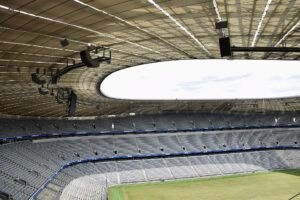
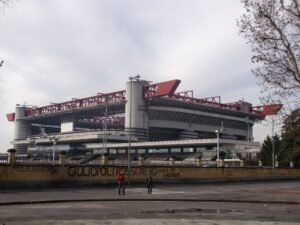
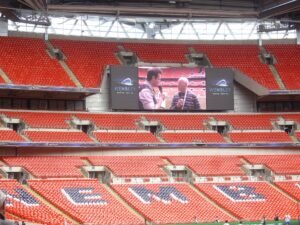
Image credit: Niels Elgaard Larsen / Wikimedia Commons (CC BY-SA 3.0)