
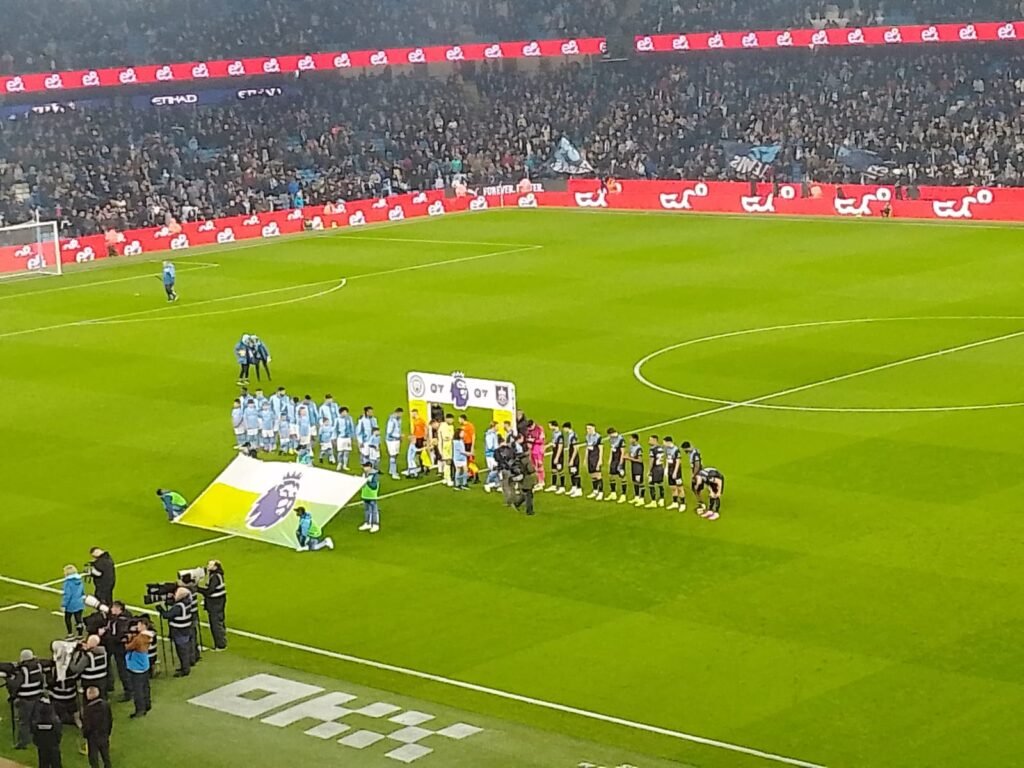
Twenty Premier League clubs, twenty different pricing structures, and no single figure that meaningfully represents what “a Premier League ticket” costs. A seat at a promoted club playing in a converted lower-league ground can cost a fraction of the equivalent position at a London giant with limited capacity and enormous global demand. This guide sets out how pricing actually varies across the division and what drives the gap.
Quick Reference: What Drives Premier League Pricing
| Factor | Effect |
|---|---|
| Club location (London premium) | Significant increase |
| Stadium capacity vs demand | Scarcity drives price up |
| Fixture category | Same seat, different price by opponent |
| Away ticket cap | £30 league-wide, regardless of club |
The London Premium
Arsenal, Chelsea and Tottenham consistently sit toward the top of the league’s pricing table, reflecting both higher operating costs in the capital and intense local demand competing for a limited number of seats. Chelsea in particular combines a small, capacity-constrained ground with high demand, a combination that keeps prices elevated even for routine fixtures.
Clubs Outside London Tend Toward Better Value
Clubs with larger grounds relative to their support base, or those outside the capital’s higher cost base, generally offer noticeably lower general admission pricing for a comparable standard of football. A supporter prioritising value over a specific famous name will consistently find better prices at clubs in this category than among the traditional London giants.
The One League-Wide Price Control
Away tickets are capped at £30 across every Premier League ground under a collective agreement between the clubs, following sustained campaigning by supporter groups. This remains the only meaningful price control in English top-flight football, and it applies identically whether the home club is among the most expensive or the most affordable in the division.
Why This Cap Exists
The agreement followed years of campaigning highlighting that travelling supporters, who contribute significantly to matchday atmosphere, were being priced out by escalating away ticket costs at some clubs. It represents one of the few instances of coordinated action across the entire league on pricing.
Category Pricing Within Each Club
Beyond the differences between clubs, nearly every Premier League side prices its own fixtures by category, charging more for matches against major rivals and considerably less for games against newly promoted sides or in early domestic cup rounds. This means the cheapest route to a specific stadium is often choosing a low-category fixture over the specific opponent.
Membership and Season Tickets
General sale availability across the division varies enormously by club, with the biggest names typically requiring membership or an established attendance history simply to access tickets at any price. Season tickets offer the lowest per-match cost for committed supporters but come with waiting lists that can run for years at the most popular clubs.
Hospitality as an Alternative Route
When general admission has sold out, hospitality packages remain available at most grounds at a considerable premium, offering a legitimate if expensive way to attend a specific high-demand fixture that would otherwise be unreachable through standard sale.
How Broadcasting Revenue Changed the Pricing Conversation
Premier League clubs collectively earn enormous sums from domestic and international broadcasting deals, a fact supporter groups regularly cite when campaigning against ticket price increases, arguing that matchday income has become a smaller share of overall revenue than it once was. Clubs counter that stadium operating costs, wages and competition for talent have risen in parallel, and the resulting tension shapes pricing decisions at nearly every club in the division.
This broader financial context is worth understanding because it explains why price freezes, when they happen, are typically framed by clubs as a goodwill gesture toward supporters rather than a response to financial necessity, a distinction that has fuelled ongoing campaigns for further reductions at several clubs.
Season-by-Season Variation
Pricing at most clubs is reviewed and adjusted annually, meaning a guide written for one season can understate or overstate costs by the time a visitor actually books. Checking the specific club’s current published pricing, rather than relying on a fixed figure from memory or an older source, remains essential regardless of how familiar a supporter is with the general pricing landscape described here.
How Newly Promoted Clubs Price Their First Season
A club arriving in the Premier League for the first time in years typically prices its opening season cautiously, aware that its own supporter base is used to considerably lower Championship-level costs and that a sudden jump could depress attendance at a moment when matchday atmosphere matters for a side fighting relegation. This makes a newly promoted club’s ground, for at least its first top-flight season, one of the more reliable pockets of value in the division regardless of the higher standard of opposition now visiting.
That pricing caution rarely survives a second consecutive season in the division, since clubs that establish themselves typically begin closing the gap to their established rivals once the immediate risk of an instant relegation and pricing backlash has passed.
Local Rivalries and Their Own Pricing Category
Beyond the broad category system already covered, several clubs carve out a distinct top pricing tier specifically for a local derby, treating it as a separate event from other high-category fixtures such as a game against a traditional title rival. A Merseyside derby or a north London derby can carry pricing above even a match against a reigning champion, reflecting demand driven by local rivalry rather than the visiting club’s league position or reputation.
How Newly Promoted Clubs Price Their First Season
A club arriving in the Premier League for the first time in years typically prices its opening season cautiously, aware that its own supporter base is used to considerably lower Championship-level costs and that a sudden jump could depress attendance at a moment when matchday atmosphere matters for a side fighting relegation. This makes a newly promoted club’s ground, for at least its first top-flight season, one of the more reliable pockets of value in the division regardless of the higher standard of opposition now visiting.
That pricing caution rarely survives a second consecutive season in the division, since clubs that establish themselves typically begin closing the gap to their established rivals once the immediate risk of an instant relegation and pricing backlash has passed.
Local Rivalries and Their Own Pricing Category
Beyond the broad category system already covered, several clubs carve out a distinct top pricing tier specifically for a local derby, treating it as a separate event from other high-category fixtures such as a game against a traditional title rival. A Merseyside derby or a north London derby can carry pricing above even a match against a reigning champion, reflecting demand driven by local rivalry rather than the visiting club’s league position or reputation.
Tips for Finding Value Across the League
Compare specific clubs rather than assuming a single average price applies across the division. Target lower-category fixtures at any club for the best combination of price and access, and remember the away cap applies everywhere, making a trip to support a visiting team consistently the most predictable low-cost option.
Overall Summary
Premier League ticket prices vary more by which club and which fixture than by any single division-wide standard, and a visitor comparing options across several grounds will find value away from the traditional London clubs at the top of the market.
📚 From the Blog


Image credit: Fra Casa / Wikimedia Commons (CC0)