
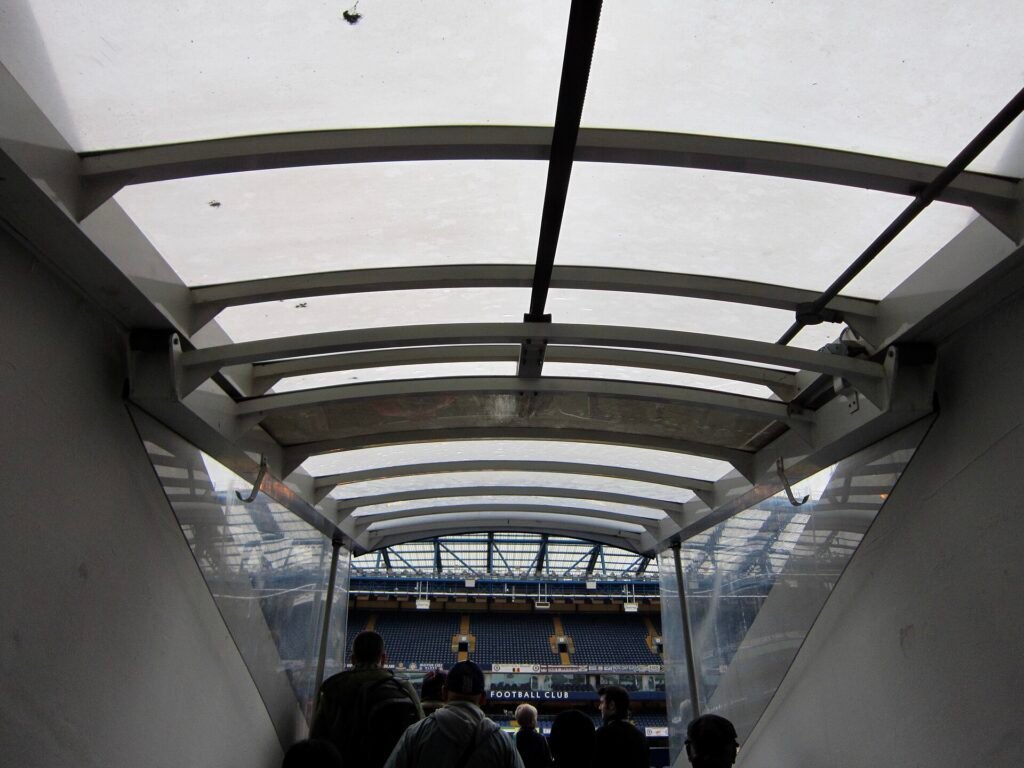
Stamford Bridge sits on a tight urban site, hemmed in by railway lines and residential streets, and that constraint shapes almost everything about visiting, from the ground’s unusual layout to how difficult it is to expand. This guide covers what to expect.
Quick Reference: Stamford Bridge Matchday Essentials
| Stage | Key Advice |
|---|---|
| Transport | Fulham Broadway station, District line |
| Arrival | 90 minutes before kick-off |
| Seating note | Some restricted-view seats in older stands |
| Departure | Consider walking to alternative stations |
Fulham Broadway and the Walk In
Fulham Broadway on the District line sits closest to the ground, a short walk directly to the stadium entrances. The station becomes very congested immediately after matches given its proximity.
Allowing Time for the Tighter Concourses
Ninety minutes before kick-off is sensible given the ground’s tighter concourses compared with more recently built stadiums, allowing time to clear security without rushing.
Checking Your Seat in Advance
Older sections of the ground carry restricted-view seats caused by supporting structures, and checking your specific block before travelling avoids a disappointing surprise once inside.
What the Older Stands Are Like
Concourses reflect the site’s age and constrained footprint, narrower than at more recently built grounds, meaning half-time queues can move slowly in the older stands specifically.
Where the Shed End Noise Comes From
The Shed End remains the traditional source of the loudest support, while the ground’s tight design means even seats along the side sit closer to the pitch than at many larger, more modern stadiums.
Avoiding the Fulham Broadway Crush
Fulham Broadway’s congestion after matches is significant enough that walking to West Brompton or Parsons Green, both a short distance away, is a useful alternative regular supporters use.
What to Pack for a West London Matchday
A card given limited cash acceptance at several outlets, and comfortable footwear given the walk to alternative stations recommended for departure.
Accessible Seating at Stamford Bridge
Provision here is more limited than at newer grounds, reflecting the site’s age and constrained footprint, and contacting the club in advance for specific accessible seating is more important here than at more recently built stadiums.
Practical Advice for a First Visit
Check your seat for restricted-view risk before booking, and plan to walk to an alternative station on the way home rather than joining the crush at Fulham Broadway.
The Chelsea Megastore and Museum
Positioned within the stadium complex, the club’s megastore and museum together cover Chelsea’s history and offer a retail option considerably larger than the pop-up stalls found around most older grounds. Both are accessible to ticket holders on a matchday without an additional charge for the museum, making a visit here a reasonable way to fill part of the extended arrival window recommended earlier in this guide.
Pubs Near the Ground and Away-Day Etiquette
Several pubs immediately around Stamford Bridge operate a home-only policy on matchdays, a common practice at English grounds with a history of segregation concerns, meaning away supporters should research specifically away-friendly venues rather than assuming any nearby pub will admit them. Fulham Broadway itself hosts a range of chain and independent options better suited to a mixed crowd, a more reliable choice for a travelling supporter unfamiliar with the area’s specific local customs.
Bag Checks Given the Ground’s Tighter Layout
Security screening at Stamford Bridge follows the standard Premier League pattern, but the ground’s constrained, tightly built footprint, already covered elsewhere in this guide, means queues at security can back up more noticeably during busy periods than at a more modern stadium with wider approaches. Building extra time into your arrival window specifically accounts for this bottleneck, on top of the general ninety-minute recommendation already given.
The Shed End Tradition
The Shed End’s reputation as the traditional home of Chelsea’s most vocal support dates back decades, predating the stadium’s various modern redevelopments, and the name itself refers to a covered terrace structure that existed on the site long before the current all-seater stand was built. Understanding this history adds context to why this specific end retains its status despite the ground having been rebuilt substantially since the name was first coined.
The Bottom Line on Stamford Bridge
Stamford Bridge’s tight urban setting is both its charm and its main practical challenge, and knowing that in advance makes for a considerably smoother visit.
📚 From the Blog



Image credit: Ank kumar / Wikimedia Commons (CC BY-SA 4.0)