
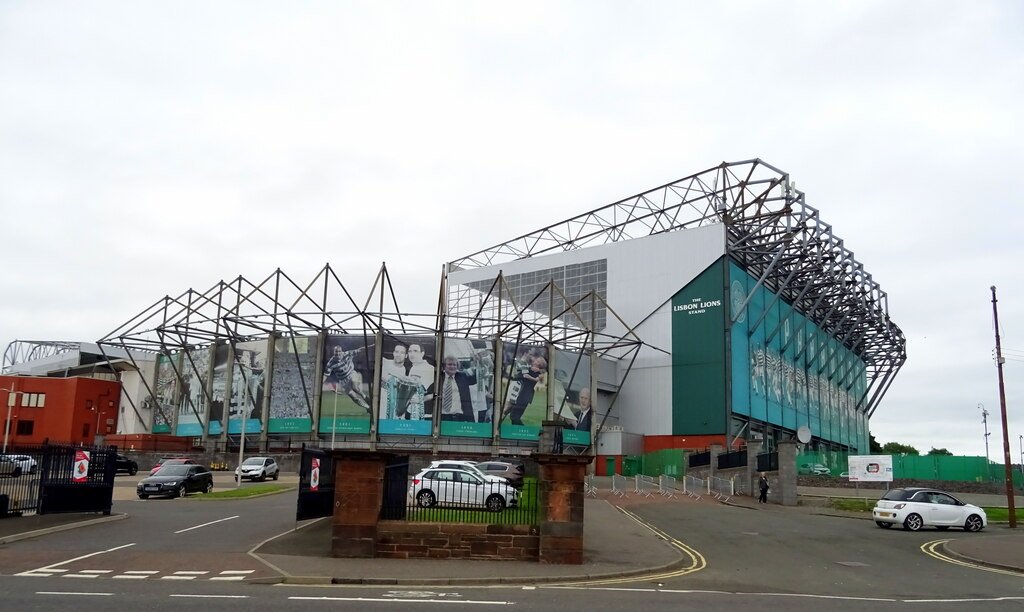
In 1967, Celtic won the European Cup with a starting eleven drawn entirely from within roughly thirty miles of the ground they were about to play in front of. The Lisbon Lions, as that team became known, remain the only squad in the competition’s history assembled so locally, and the achievement sits at the emotional core of everything Celtic Park represents. Visiting supporters do not simply hear about this history; they feel its presence in a stadium where the connection between club, city and crowd has rarely loosened in the decades since.
That connection is why Celtic Park is consistently named among the loudest grounds in European football, a reputation that has held up under scrutiny in a way many stadium superlatives do not. Visiting players across decades, including at some of the biggest clubs in the world, have described it as among the most intimidating atmospheres they have faced.
This review covers what actually produces that noise, why a European night here is so different from a routine domestic fixture, the practical realities of Glasgow’s east end, and what a first-time visitor needs to know before travelling.
Quick Facts: Celtic Park at a Glance
| Feature | Details |
|---|---|
| Capacity | Around 60,000, the largest in Scotland |
| Opened | 1892 on the current site |
| Home Team | Celtic |
| Location | Parkhead, east end of Glasgow |
| Key Section | North Curve safe standing area |
| Nearest Stations | Dalmarnock and Bridgeton (both a walk) |
| Domestic Prices | Significantly below equivalent English grounds |
| Hardest Ticket | The Rangers fixture, the Old Firm derby |
Scottish football’s lower general pricing, visible in that table, is worth setting expectations around from the start: for the size and reputation of this ground, Celtic Park represents some of the best value in Britain, with the notable exception of the derby.
Record Attendances and the Old Terracing
Before the 1990s rebuild converted the ground to its current all-seated configuration, Celtic Park’s open terracing accommodated crowds recorded at well over 90,000 for major fixtures, figures that reflect an era of Scottish football when standing capacity vastly exceeded what any all-seater stadium could hold today. The current capacity of around 60,000, while still the largest in the country, represents a substantial reduction driven by the same safety-led changes that reshaped stadiums across Britain following the Taylor Report.
Older supporters who attended matches on the original terracing frequently describe a physical density and sway to the crowd that the modern seated Celtic Park, for all its continued reputation for noise, does not fully reproduce, a pattern common to many British grounds that made the same transition during the same period.
What Actually Produces the Noise
The reasons are structural as well as cultural, and understanding both explains why this ground consistently outperforms stadiums twice its size on atmosphere. The stands enclose the pitch on all four sides with minimal gaps at the corners, and a continuous roof runs the full circuit, reflecting sound back down onto the pitch rather than losing it upward into open air, the same acoustic principle that makes an enclosed room louder than an open field.
The North Curve, a safe standing section introduced in 2016 using rail seating that lets supporters stand legally within a numbered, barriered space, concentrates the organised support into one dense block. A crowd standing and moving together as a single mass produces noise a seated equivalent simply cannot match, and the section has become the acknowledged source of the ground’s loudest sustained singing.
European Nights Under the Lights
Celtic Park at its best is a Champions League or Europa League fixture played under floodlights, when the combination of occasion, European opposition and a full ground produces an intensity that has repeatedly and visibly affected visiting teams over the years. Managers of major European clubs have specifically named this stadium among the hardest atmospheres they have taken a team into.
A routine domestic league fixture against a side from the lower half of the Scottish Premiership is a considerably quieter experience by comparison, though still louder than most English grounds on an equivalent day. If a truly memorable atmosphere is the goal of your trip, a European night is worth prioritising above almost any other consideration.
Inside the Ground
The current stadium was substantially rebuilt during the 1990s, replacing most of the old standing terracing with the large seated stands that form the ground today, and it looks considerably more modern from the inside than its 1892 founding date might suggest, while keeping a traditional four-sided shape instead of the continuous bowl newer stadiums favour.
The Lisbon Lions Stand, named after the 1967 European Cup-winning team, is one of the four sides and carries that history in its name. Sightlines throughout the rebuilt sections are clear, with steep upper tiers offering a full view of the pitch and no significant obstructions, though facilities remain functional, not modern, by the standards of the newest English grounds.
Jock Stein and the Managerial Legacy
Jock Stein managed Celtic from 1965 to 1978, and it was his side that won the 1967 European Cup, alongside nine consecutive Scottish league titles during his tenure, a period regarded as the most successful in the club’s history. Stein’s approach to attacking, possession-based football influenced Scottish coaching for a generation afterwards, and his statue stands prominently along the approach to the ground today.
The stand named in his honour, alongside the Lisbon Lions Stand, means the current stadium physically commemorates both the manager and the players from that single defining season, a concentration of tribute to one era that is unusual even among historic European clubs. Supporters visiting for the first time consistently cite the weight given to 1967 throughout the ground as something that sets Celtic Park apart from stadiums with a more evenly spread sense of history.
Getting There
The ground sits around two miles east of Glasgow city centre in Parkhead. Dalmarnock and Bridgeton stations both serve the area, each around a fifteen to twenty-minute walk, connected to central Glasgow by train. Matchday buses run directly from the city centre and are the option most visiting supporters use, dropping close to the ground and running frequently before and after matches.
Walking the full distance from the city centre takes around forty minutes along a straightforward route and is a solid option for the return journey when transport is at its busiest. Driving is not advisable given narrow residential streets and matchday parking restrictions across the surrounding area.
Ticket Prices and the One Exception
Scottish football is considerably cheaper than the Premier League across the board, and Celtic Park offers strong value for a ground of this size and reputation. Ordinary league tickets sit well below what an equivalent English fixture at a comparable club would cost, making this one of the more accessible major European atmospheres to experience.
European fixtures cost more and are harder to obtain as demand rises sharply for the biggest nights, and the Rangers fixture, the Old Firm derby, is the most difficult ticket in Scottish football by a clear margin, with the away allocation small and home tickets going almost entirely to season ticket holders. For a first visit, a European tie or a domestic fixture against one of the other larger Scottish clubs offers a realistic combination of atmosphere and availability that the derby simply does not.
Facilities and What to Expect Inside
Facilities across the ground are functional rather than modern, in keeping with a stadium substantially rebuilt in the 1990s rather than in the last decade. Concourses handle the crowd adequately on a routine matchday but become congested at half time during the biggest fixtures, particularly European nights and the derby, when the whole ground is at capacity.
The food offering leans toward traditional Scottish matchday fare, pies and hot drinks predominating, priced noticeably below equivalent offerings at English Premier League grounds. Toilet provision is adequate but not generous for the largest crowds, a common feature of stadiums built or substantially renovated before the most recent generation of stadium design prioritised concourse space more heavily.
The Museum and Tour
The stadium tour leans heavily, and rightly, on the 1967 European Cup story, walking visitors through the dressing rooms, the tunnel and pitchside while explaining how a squad built almost entirely from the local area achieved something no club has repeated since. It is a remarkable piece of football history and the tour treats it with the depth it deserves.
Compared to the larger European stadium tours at clubs like Real Madrid or Barcelona, this one is considerably cheaper and noticeably less crowded, offering a more relaxed pace through material that is, for anyone interested in the sport’s history, every bit as compelling.
Around the Ground
Parkhead is a residential, working-class area of Glasgow’s east end rather than a city-centre destination, and the Celtic Way, the pedestrian approach leading up to the stadium, carries the matchday atmosphere with stalls, the club shop and supporters gathering before kick-off. The Jock Stein statue and a memorial garden sit along this route and are worth a few minutes before the crowds build.
Food and drink options immediately around the ground are limited and traditional pubs in the area fill hours before kick-off, so most visitors, sensibly, eat in Glasgow’s well-supplied and inexpensive city centre before travelling out to Parkhead.
Accessibility and Combining the Trip With Glasgow
Celtic Park offers wheelchair positions and accessible facilities that have improved over successive renovations, though as with most stadiums substantially rebuilt in the 1990s rather than the most recent decade, provision is more limited than at the newest English grounds, and confirming current arrangements directly with the club ahead of any visit is sensible practice rather than an optional extra.
Glasgow itself offers considerably more than the football for anyone building a longer trip, from the Kelvingrove Art Gallery to the city’s well-regarded live music scene, and the short distance between Celtic Park and Ibrox, home to Rangers on the opposite side of the city, means visitors with an interest in Scottish football’s defining rivalry can, fixtures permitting, see both grounds within a single trip even without attending the derby itself.
Scottish football’s broader competitiveness has grown in recent seasons with European qualification success for both Glasgow clubs, and the improved continental form has, if anything, sharpened demand for tickets rather than eased it to Celtic’s biggest European nights, a trend worth factoring into how far in advance a visitor should plan to book.
Weather, Timing and Making the Most of a Trip
Glasgow’s climate is unpredictable across all seasons, and evening European fixtures in particular can turn cold and wet with little warning even in months that started the day mild, making proper waterproof and warm layers essential regardless of the forecast checked that morning. The exposed nature of parts of the ground to wind coming off the surrounding streets adds to this, and experienced visitors consistently overprepare for weather rather than trust a single forecast.
For anyone building a trip around Scottish football more broadly, checking both Glasgow clubs’ fixture lists together before booking travel can occasionally allow attendance at matches from both Celtic and Rangers within a short visit, though never against each other unless specifically attending the derby itself, which requires considerably more advance planning given ticket scarcity.
Celtic’s European commitments in recent seasons have added further fixtures to an already busy home calendar, meaning a visitor with flexible dates has more opportunities than in previous decades to catch a continental night specifically, rather than being limited to domestic league fixtures alone.
Tips for a First Visit
Book a European fixture if your schedule allows it, since the gap between that atmosphere and a routine domestic game is wide. Aim for the North Curve if noise is the priority, understanding that it is a standing section for the full match.
Arrive at least ninety minutes early to walk the Celtic Way and see the memorial garden without a crowd, then eat in the city centre before you travel out, since options near the ground are limited. Bring warm and waterproof clothing regardless of season, since Glasgow’s weather can turn quickly and floodlit evening kick-offs get cold.
How It Compares to Ibrox and Other Scottish Grounds
Ibrox, Rangers’ home across the city, offers a broadly comparable scale and a fiercely partisan atmosphere of its own, and the two grounds together define Scottish football’s most intense rivalry, though Celtic Park’s reputation for sustained noise on European nights is generally regarded as the more consistent of the two by neutral observers and visiting players alike. Against English grounds of a similar capacity, Celtic Park offers considerably better value, reflecting Scottish football’s lower general pricing across the board.
For a visitor comparing Celtic Park to Anfield or Signal Iduna Park, the closest parallels on this list, Celtic’s advantage is the enclosed roof design trapping sound as effectively as either, at a price point closer to Dortmund’s than to Liverpool’s considerably higher Premier League costs.
The Away End Experience
Visiting supporters at Celtic Park are housed in a dedicated section with its own entrance and segregated concourse, a standard arrangement at Scottish grounds of this size, and the away allocation for domestic fixtures is generally more generous relative to capacity than at many English Premier League grounds, reflecting a stronger away-support culture across Scottish football overall.
For the Rangers fixture specifically, security and segregation are considerably more intensive than for any other match at the ground, with police escorts common for organised away travel and a policing operation that visiting neutrals should be aware of before choosing to attend that particular fixture without local guidance.
Overall Verdict
Celtic Park earns its reputation rather than simply trading on it. The combination of a fully enclosed roof, a concentrated standing section and a support with a documented history of producing extraordinary atmospheres makes this one of the essential football experiences in Britain, and it costs considerably less than the equivalent English grounds it is regularly compared to.
Choose a European night if you possibly can, get to Parkhead early, and prepare for a stadium where the 1967 story is not a museum exhibit but something the current crowd still visibly carries into every big match.
📚 From the Blog

Image credit: JThomas / Wikimedia Commons (CC BY-SA 2.0)